


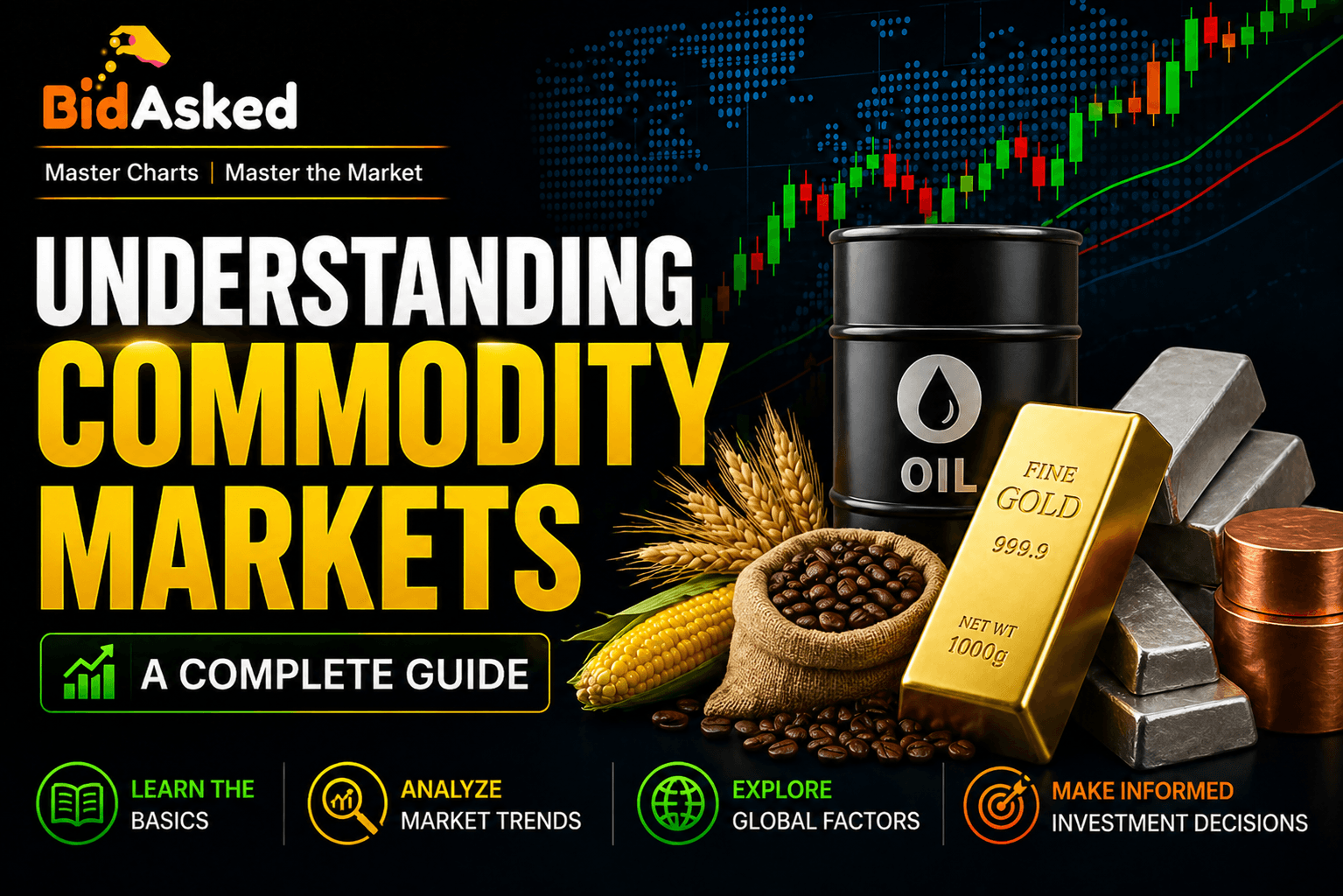
The commodity market is a financial marketplace where raw materials and primary goods, known as commodities, are bought and sold. Similar to the stock market, the commodity market also includes buyers & sellers. In the stock market, traders and investors trade in shares, whereas in the commodity market, traders and investors trade in commodities such as gold, silver, crude oil, copper, nickel, rice, wheat, and many more.
The majority of commodity trades are executed through spot and derivatives markets. Commodities in the spot market are bought and sold for immediate delivery at existing prices, whereas the derivatives market deals in futures and options that mature on a future date. Futures contracts are the most commonly traded instruments in the commodity market, allowing participants to secure prices and reduce uncertainty.
In India, structured commodity trading is carried out on recognized commodity exchanges like the multi commodity exchanges of India (MCX) and the national commodity and derivatives exchange (NCDEX). These exchanges provide a transparent, regulated, and technology driven platform for trading a wide range of commodities. It allows investors to diversify their portfolios, which not only minimizes risk but also provides a hedge against inflation. The following are the two main categories of commodities:
A) Hard commodities
B) Soft commodities
Hard commodities
Hard commodities are natural resources that are extracted from the earth through mining or drilling processes. They are primarily divided into two categories:
Energy resources
Energy resources are essential commodities with a wide range of applications, including electricity generation, industrial usage, and transportation. Common examples of energy commodities include crude oil, natural gas, coal, and petroleum products.
Precious metals
Examples of precious metals include gold, silver, and platinum, which are widely traded in the commodity market for investment, hedging, and industrial purposes.
Soft commodities
Soft commodities are primarily based on agricultural products and represent one of the oldest tradable commodity categories in the global market. These commodities include crops such as wheat, corn, soybean, rice, and cotton. In addition, livestock commodities such as live cattle and feeder cattle are also classified under soft commodities.
Commodity exchange in India
Commodity exchanges in India play an important role by providing an organized and regulated platform for trading various commodities such as energy, metals, and agricultural products. The following is a list of the major commodity exchanges in India.
Multi commodity exchange of India Ltd (MCX)
Multi commodity exchange of India ltd (MCX) is the largest commodity derivatives exchange in India, providing a robust and transparent platform for trading in various commodities such as metals, energy, and agricultural commodities.
The clearing and settlement operations of MCX are handled by its wholly owned subsidiary, multi commodity exchange clearing corporation ltd. (MCXCCL), which ensures smooth trade settlement, risk management, and financial integrity of the market. MCX offers two main types of derivative contracts for trading:-
A) Future contract
B) Option contract
National commodity and derivative exchange (NCDEX)
National commodity and derivative exchange (NCDEX) is a leading commodity exchange in India that primarily deals in agricultural commodities, including grains, spices, pulses, and oil seeds.
Indian commodity exchange (ICEX)
Indian commodity exchange (ICEX) focuses mainly on selected agricultural and speciality commodities, with a primary emphasis on diamond contracts. Unlike MCX, ICEX does not actively trade major non-agricultural commodities such as gold and silver, which are predominantly traded on larger commodity exchanges in India.
Commodity market trading timing in India
| Sr. No. | Exchange | Commodity Type | Trading Session | Time (IST) |
| 1 | Multi commodity exchange of India Ltd (MCX) | Agricultural and non-agricultural commodities | Morning session Evening session | 9 am to 5 pm 5 pm to 11: 30 pm |
2 | National commodity and derivative exchange (NCDEX) | Agricultural commodities | Regular session | 9 am to 5 pm |
Key notes
- Trading days: Commodity markets in India operate from Monday to Friday, excluding exchange declared holidays.
- Pre–market session: There is no separate pre-market session for commodity trading in India. Trading begins directly at 9:00 am
- Extended trading hours: On MCX, evening trading hours may be extended during international daylight saving periods due to alignment with global commodity markets. During daylight saving time, MCX evening session may extended up to 11:45 pm or later for selected contracts.
- Muhurat trading: Muhurat trading is a special one hour trading session, usually conducted in the evening on Diwali. Investors and traders consider it an auspicious time to initiate new trades and investments.
Conclusion
The commodity market in India plays an important role in strengthening the country’s economy. It provides organized trading platforms such as MCX and NCDEX, where participants can trade a wide range of commodities, including energy products, metals, agricultural goods, and more. The Indian commodity market offers sufficient opportunities for traders and investors to benefit from price movements, hedge risks, and diversify their investment portfolios beyond traditional asset classes.
FAQ’S
The commodity market is a financial marketplace where traders and investors buy and sell physical goods like gold, silver, crude oil, natural gas, and agricultural products through spot and derivative contracts to hedge risk and earn profits.
The commodity market is where raw materials like gold, oil, and wheat are traded, while the stock market is where people buy and sell shares of companies.
Stocks are better for long term investment, while commodities are better for short term trading, so the best option depends on your risk level and trading goals.
The commodity market in India is regulated by securities and exchange board of India (SEBI), which makes rules to ensure safe, fair, and transparent trading for investors.
There are two main commodity exchanges in India MCX and NCDEX, where people buy & sell commodities like gold, silver, and agricultural products.
Disclaimer
This article is for educational and informational purposes only and should not be considered financial, investment, trading, legal, or tax advice. Cryptocurrency, blockchain, stock markets, and other financial investments involve risks. Always conduct your own research and consult a qualified financial advisor before making any investment decisions.
