


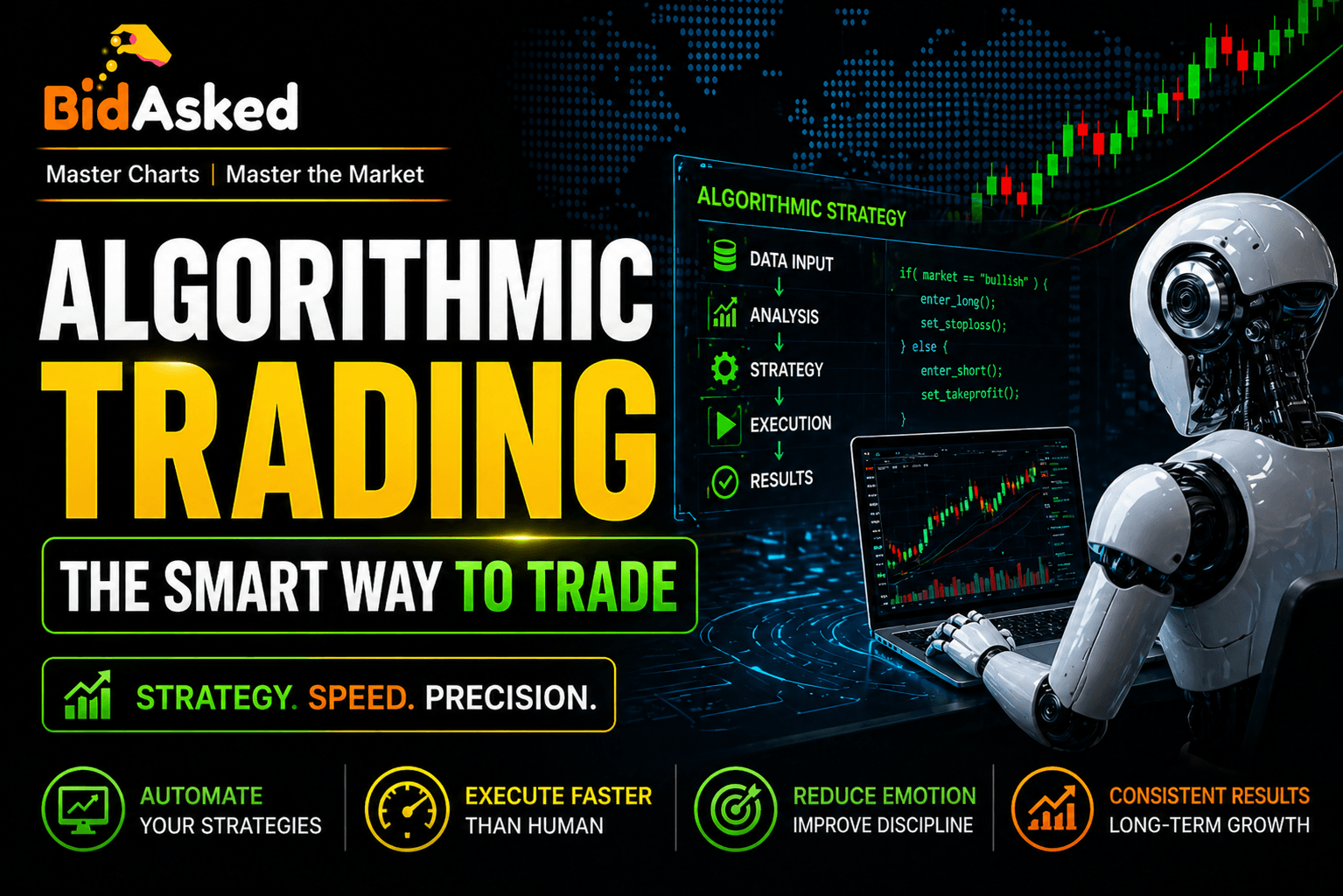
Algorithmic trading is a technique in which computer programs automatically execute trades based on predefined rules and algorithms. These algorithms use parameters such as price, volume, timing, quantity, and other market conditions to make trading decisions. It is commonly known as Automated trading or Algo trading.
The primary aim of algorithmic trading is to maximize trading efficiency, minimize human intervention, and exploit trading opportunities at speeds far beyond manual trading. This method is predominantly used by institutional investors and large hedge funds, while retail traders also participate using broker supported algorithmic platforms and tools.
Algorithmic trading is notable for its skill in processing high volumes of data at the same time. Human traders are constrained by time and capacity when analyzing charts and indicators, but algorithmic trading systems can rapidly scan hundreds of stocks, timeframes, and indicators almost instantly. This strength allows algorithmic trading to detect fast moving opportunities that are not easily visible to the naked eye.
Efficient order execution is one of the key advantages of algorithmic trading. To minimize market impact, trading algorithms break down big orders into multiple small trades and execute them strategically based on liquidity levels. This minimizes slippage and transaction costs, which is significantly important for large traders and institutions.
Based on real time market data, algorithmic trading systems execute trades automatically when predefined conditions are met. One common example is a moving average crossover strategy where the algorithm buys 100 shares once the 50 day SMA overtakes the 200 day SMA, confirming an upward trend. The system exits the position when the 20 day SMA crosses below the 50 day SMA, signaling potential weakness. By removing human emotions from decision making, this approach ensures high speed and precise trade execution beyond the scope of manual trading.
Algorithmic trading can be applied across multiple market segments, including equities, forex, commodities, and cryptocurrencies. However, it is most widely used and dominant in the equities and forex markets due to their high liquidity, advanced electronic trading infrastructure, and consistent market participation.
The structure of algorithmic trading allows traders to integrate risk management functions directly into execution systems. The system automatically implements stop loss levels, exposure limits, daily loss thresholds, and position sizing control. This setup enforces consistent risk controls, even during sudden or unpredictable market movements.
Algorithmic trading requires robust technology to develop and deploy tradable algorithms. Therefore, traders must choose a programming language that aligns with their trading objectives. Commonly used languages include python, c++, java, and java script.
Despite its advantages, algorithmic trading does not ensure profitable outcomes. The effectiveness of an algorithm depends on the quality of the strategy, accuracy of data, robustness of testing, and adaptability to changing market conditions. Market dynamics shift over time, and without regular review and updates, an algorithm effective in one phase may lose its performance in another.
Along with programming skills, a successful algorithmic trading system requires robust technological infrastructure, including high speed internet, powerful servers, and dependable live market data feeds. The right combination of programming capabilities and robust infrastructure ensures accurate data processing and enables informed trading decisions to be executed at high speed with precision.
Advantages Of Algorithmic Trading
1) Ultra Fast Trade Execution
Algorithmic trading can execute trades within milliseconds, making it significantly faster than human traders. This speed is especially critical in strategies such as high frequency trading (HFT) and arbitrage, where thousands of orders are processed in fractions of a second to capture short lived market opportunities.
2) Emotion Free And Disciplined Trading
Algorithmic trading strictly follows predefined rules, eliminating emotions such as fear, greed, and overtrading. This disciplined approach helps to maintain consistency and reduces the overall risk associated with emotional decision making.
3) Improved Market Liquidity
In algorithmic trading, automated systems repeatedly execute buy and sell orders, it help to reduce the bid-ask spread and improve market liquidity through better price discovery.
4) Evaluating Strategies Through Backtesting
Algorithmic trading allows traders to test strategies on historical data and evaluate their past performance across different market conditions before deploying them in live markets.
Disadvantages Of Algorithmic Trading:-
1) High Dependency On Technology
Algorithmic trading heavily depends on accurate programming and a robust technological infrastructure. Even minor coding errors, system bugs, or connectivity failures can lead to incorrect trade execution and may result in significant financial losses.
2) Changing Market Conditions
Financial markets are constantly evolving, and a strategy that works well under certain market conditions may become ineffective when volatility, liquidity, or regulatory conditions shift.
3) High Initial Setup And Infrastructure Cost
Infrastructure cost setting up algorithmic trading platforms requires substantial initial funding due to the need for robust hardware, advanced trading software, premium data feeds, and co-location facilities.
Conclusion
Algorithmic trading is an automated trading approach that has transformed the financial markets by minimizing manual intervention and replacing it with predefined algorithmic programs. These algorithms execute trades at high speed and with a greater precision, which is practically unachievable through manual trading by human traders.
Algo-trading leverages advanced models such as mathematical techniques, Statically analysis, and machine learning algorithms to analyze large volumes of market data. These technologies help to identify trading opportunities, reduce human bias, and eliminate emotional decision making, thereby improving consistency and discipline in trading strategies.
Even though algorithmic trading is a powerful and efficient trading tool, it is not free from risks like technical glitches, regulatory issues, slippage, and latency. As a result, a thorough understanding of risk management, dependable systems, and well designed strategies is crucial prior to execution.
FAQ’S
Answer: Algorithmic trading is a way of trading in the stock market where computers automatically buy and sell shares using pre-set rules based on price, time, and and market conditions.
Answer: Algorithmic trading is widely used by institutional investors, hedge funds, banks, and professional traders to execute large volume trades efficiently.
Answer: Algorithmic trading offers benefits such as faster trade execution, reduced human emotions, improved accuracy, lower trading costs, and the ability to trade large volumes efficiently.
Answer: The main risks of algorithmic trading include software or system errors, sudden market changes, low liquidity, and fast losses if the trading program does not work as expected.
Answer: Yes, retail traders can do algorithmic trading by using simple trading software or broker tools that automatically place trades based on pre-set rules, even with limited capital and basic knowledge.
Disclaimer
This article is for educational and informational purposes only and should not be considered financial, investment, trading, legal, or tax advice. Cryptocurrency, blockchain, stock markets, and other financial investments involve risks. Always conduct your own research and consult a qualified financial advisor before making any investment decisions.
